
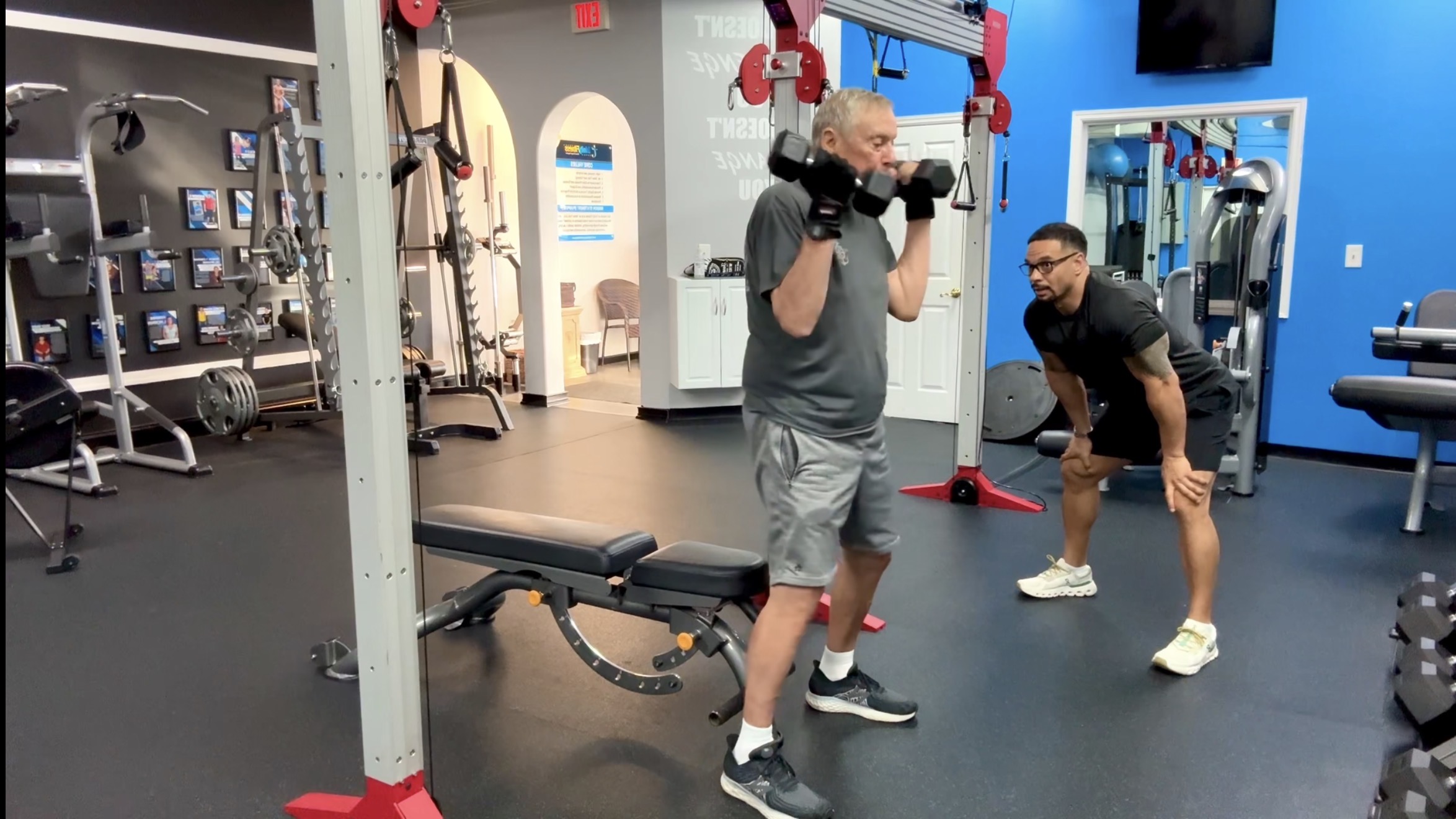
If you are over 60 and thinking about working with a personal trainer, you probably have a few questions. What should a good workout look like? Can the exercises be adjusted to where you are today? And how do you know if a coach understands your goals?
I have worked with adults in Palm Beach Gardens for years, and the majority of the people who train with me at Trinity Fitness are in their 60s, 70s, and beyond. This guide is what I would want a family member to know before hiring someone. No sales pitches or fitness jargon, just practical, honest answers.
Quick Guide Navigation
In This Guide
- 1. Why Personal Training After 60 Should Fit the Person
- 2. The Four Pillars of a Complete Senior Fitness Program
- 3. What If You Have Joint Pain, Limited Mobility, or Health Concerns?
- 4. What Does a Private 30-Minute Session Look Like?
- 5. How Often Should Adults Over 60 Strength Train?
- 6. How to Choose a Personal Trainer for Older Adults in Palm Beach Gardens
- 7. What Does Senior Personal Training Cost?
- 8. Why I Work This Way at Trinity Fitness
- 9. Frequently Asked Questions
- 10. A Simple First Step
Why Personal Training After 60 Should Fit the Person
Training in your 60s, 70s, or beyond is about respecting where your body is today. A workout should never be a one-size-fits-all routine or an intense session designed for someone with completely different priorities. Your body has decades of life experience, past injuries, joint sensitivities, and its own recovery rhythm. You can build meaningful strength, but your exercises should always be chosen with care.
That does not mean adults over 60 are fragile. Most of the people who train with me at Trinity Fitness in Palm Beach Gardens are capable, active individuals who golf, garden, travel, and enjoy time with their families. Training after 60 simply means understanding how your body adapts:
Recovery Needs Attention
Your body continues to adapt and gain strength at any age. Giving muscles and joints adequate rest between challenging sessions helps you feel energized rather than worn down.
Maintaining Muscle and Strength
As we age, naturally maintaining muscle and functional strength takes consistent physical effort. Regular resistance training helps protect muscle, support bone health, and keep everyday activities feeling manageable.
Joint Comfort and Movement Angles
Knees, hips, shoulders, and backs often prefer specific angles and ranges of motion. An experienced trainer adjusts the movement to fit your joints so target muscles work comfortably without pinching.
Everyday Independence
The real goal is everyday confidence: standing up from a low chair easily, carrying groceries, stepping off curbs steadily, and traveling without worrying about your balance.
Four Things a Well-Rounded Program Can Include
A well-rounded fitness routine for older adults balances four core areas of movement. A single 30-minute workout does not need to cover all four equally every time, but over the course of a week, these are practical foundations for everyday health:
Practical Strength Training
Strength supports bone density, joint comfort, and everyday tasks. For older adults, strength training does not require heavy barbells. We use dumbbells, cables, resistance bands, and bodyweight exercises tailored to your comfort and current strength.
Balance and Stability
Balance is an active physical skill you can practice and maintain. A safe balance routine challenges your coordination and foot stability while keeping you supported and comfortable.
Mobility and Flexibility
You do not need extreme flexibility to stay fit. Mobility simply means having comfortable range of motion in the joints you rely on every day. Gentle mobility work warms up the joints and eases stiffness through the hips, spine, and shoulders.
Aerobic Activity and Walking
Your cardiovascular health benefits from regular movement at any age. You do not need high-impact jumping or jogging to support heart health. Regular walking, swimming, cycling, or steady movement keeps your heart and lungs active without pounding your joints.
Looking for One-on-One Training in Palm Beach Gardens?
If you want to see how private 30-minute sessions work at Trinity Fitness, visit the Personal Training for Seniors service page for program details, scheduling, and what to expect.
What If You Have Joint Pain, Limited Mobility, or Health Concerns?
Almost every adult who walks into my Palm Beach Gardens studio manages at least one physical consideration. Having joint stiffness, an old sports injury, or a ongoing health topic is very common. It is rarely a reason to avoid exercise altogether. In fact, appropriate, individualized exercise is often one of the most helpful habits you can develop.
Important Scope of Practice Rule
Personal trainers are fitness professionals, not physicians, chiropractors, or physical therapists. I do not diagnose medical conditions, prescribe treatments, or replace formal physical therapy. If you have sharp joint pain, a recent surgery, an acute injury, or an unmanaged medical condition, your first step should always be talking with your doctor or physical therapist. Once your healthcare team approves exercise, my role is to design safe, comfortable workouts that respect your medical guidelines.
Here is how a qualified senior personal trainer approaches common health considerations:
Arthritis and Joint Sensitivity
We work within comfortable ranges of motion, never forcing through sharp joint pain. Strengthening the muscles around the knees, hips, and shoulders helps support the joint structures during everyday movement.
Joint Replacements
Once you finish formal physical therapy and your surgeon clears you, strength training helps rebuild muscle support. We respect any movement guidelines and focus on gradual, comfortable progression.
Osteoporosis and Bone Density
Appropriate resistance training provides gentle mechanical stimulus to support bone health. We emphasize upright posture, stable foot placement, and avoid deep spinal flexion or rapid twisting.
Lower Back Stiffness
Rather than traditional floor crunches, we focus on gentle core bracing, hip mobility, and glute strengthening to help support your lower back during daily tasks.
Blood Sugar and Metabolism
Regular physical activity and resistance training support healthy muscle metabolism and natural insulin sensitivity, making strength exercise a valuable component of an overall wellness routine.
Cardiovascular Health
With your doctor's clearance, we monitor your breathing, pace each set comfortably, and avoid holding your breath during exertion to keep your effort steady and controlled.
What Does a Private 30-Minute Session Look Like?
Many adults ask whether 30 minutes is enough time for a workout. In a crowded commercial gym where you wait for machines and deal with noise, 30 minutes passes quickly.
In a private studio with one-on-one attention, 30 minutes is focused, personalized, and very productive. Rather than a rigid minute-by-minute schedule, here is a flexible illustration of how a session typically flows:
Check-In and Joint Warm-Up (Minutes 0 to 5)
We sit down or stand comfortably to talk about how your body feels today, any joint stiffness from your week, and what felt good after our last session. Then we move through gentle mobility work to prepare your joints.
Guided Strength Work (Minutes 5 to 20)
We move through three or four core movements chosen for your goals, such as a leg movement (like a sit-to-stand), an upper-body push, a pull, and hip or core work. Resistance is adjusted so each exercise feels purposeful while keeping your form comfortable and controlled.
Balance and Movement Practice (Minutes 20 to 27)
We practice stability drills, tandem standing, or light conditioning. Practicing balance toward the end of a session helps you learn to stay steady and coordinate your body even when feeling mildly fatigued.
Cooldown and Next Steps (Minutes 27 to 30)
We finish with easy stretching, catch our breath, and confirm your next session. You leave feeling accomplished and ready for your day, not completely exhausted.
How Often Should Adults Over 60 Strength Train?
There is no single schedule that fits every person. How often you exercise depends on your starting point, recovery, health background, and personal routine.
General physical activity guidelines from organizations like the CDC and the National Institute on Aging recommend that older adults include muscle-strengthening activities at least two days a week along with regular aerobic movement like walking.
Here is what different weekly rhythms look like in real life:
1 Day Per Week
A great starting point if you are returning to exercise after years away. It helps you build initial confidence and learn the movements, though progress is gradual.
2 to 3 Days Per Week
This frequency works well for many older adults. It provides regular training stimulus while allowing comfortable recovery time between workouts.
4+ Days Per Week
Some active adults enjoy frequent sessions or split routines. The key is ensuring your joints and energy levels recover well from session to session.
Many of my clients combine two or three private studio sessions each week with regular outdoor walking, swimming, or golf on other days. That combination supports both strength and daily stamina.
How to Choose a Personal Trainer for Older Adults in Palm Beach Gardens
Palm Beach Gardens has many fitness options, from large gyms to boutique studios. But working with older adults requires specific experience, patience, and attention to detail.
Helpful Questions to Ask Any Trainer:
- Real experience with older adults: Ask what portion of their regular clients are over 60. You want someone comfortable working with different fitness levels, joint histories, and movement comfort.
- Clear exercise adaptations: Ask them directly: "If an exercise bothers my knee or shoulder, what will we do instead?" A good coach has practical alternatives ready without hesitation.
- Careful attention before you begin: They should ask about your physical history, current comfort level, and personal goals before beginning any workout.
- A respectful, supportive environment: You should never feel rushed, intimidated, or embarrassed. Coaching should feel like a supportive conversation.
Warning Signs to Watch Out For:
What Does Senior Personal Training Cost?
Personal training rates in Palm Beach County vary depending on several practical factors. Rather than relying on unconfirmed price quotes, here are the main variables that affect what you will pay:
- Coaching Format: Private one-on-one sessions offer individual attention, while small-group training divides the coach's time among multiple people.
- Session Length: Focused 30-minute sessions vs. longer 45 or 60-minute workouts.
- Coach Experience: A trainer with decades of hands-on experience coaching mature adults vs. an entry-level gym employee.
- Setting: A private, appointment-only studio vs. a commercial facility where you might also pay monthly membership dues.
When considering personal training, it helps to view it as an investment in your daily independence, mobility, and confidence.
During your free initial consultation, I will review all current program options, schedules, and pricing clearly so you have transparent details before making any decision.
Why I Work This Way at Trinity Fitness
I opened Trinity Fitness on Burns Road with a clear purpose. After serving in the U.S. Air Force, including as a Physical Training Instructor, and coaching personal training clients for over 20 years, I wanted to create a private studio where clients feel respected, comfortable, and focused.
Here is what makes my studio distinct:
Many of My Clients Are 60+
Older adults are not an afterthought at Trinity Fitness. Working with clients in their 60s, 70s, and 80s is what I do every single day.
Private, Appointment-Only Studio
No crowds, no waiting for equipment, and no loud gym distractions. When you are here, you receive my complete, undivided attention.
Focused 30-Minute Sessions
Long enough to accomplish purposeful strength and balance practice, yet focused enough that you leave feeling energized instead of depleted.
20+ Years of Hands-On Coaching
Over two decades of coaching experience adapting movements around past surgeries, joint sensitivity, and everyday movement needs.
Frequently Asked Questions
Practical answers to questions older adults frequently ask before starting.
A Simple First Step
If you are thinking about starting, the easiest place to begin is a free consultation. We will talk through your goals, your physical history, and any questions you have. Studio visits at my Palm Beach Gardens location are scheduled by appointment only, and most initial consultations happen comfortably over the phone.
You can also visit the Personal Training for Seniors service page for program details and scheduling.